Craft & materials
Technique first.
A craft is a set of decisions someone made, and kept making, until it worked. That is what we study — not a look, not a colour scheme, not an atmosphere.
Below is the working vocabulary of this collection: the materials, and the techniques that build the surfaces. Where a technique is specific, we say what it does mechanically — because the mechanism is what makes a design decision possible.
We describe techniques by name and by method. We do not attach a community name to a technique. That choice is explained in full on the disclosure page.
Materials
What the collection is made of
Multi-material is the core of the practice. Each material is chosen for a job it does better than the others — never to make a surface look busier.
- Ramie
- A bast fibre with a long history in Chinese textile practice. Crisp, dry to the touch, holds a sharp edge, and softens with wear. We use it where a garment needs structure without weight. Notably it does not drape — that is the point.
- Indigo-dyed cloth
- Indigo does not sit on the surface of a fibre; it sits inside it. That is why it fades over years rather than washing out, and why the depth reads differently in daylight than under a lamp. We choose it when a colour needs to age well.
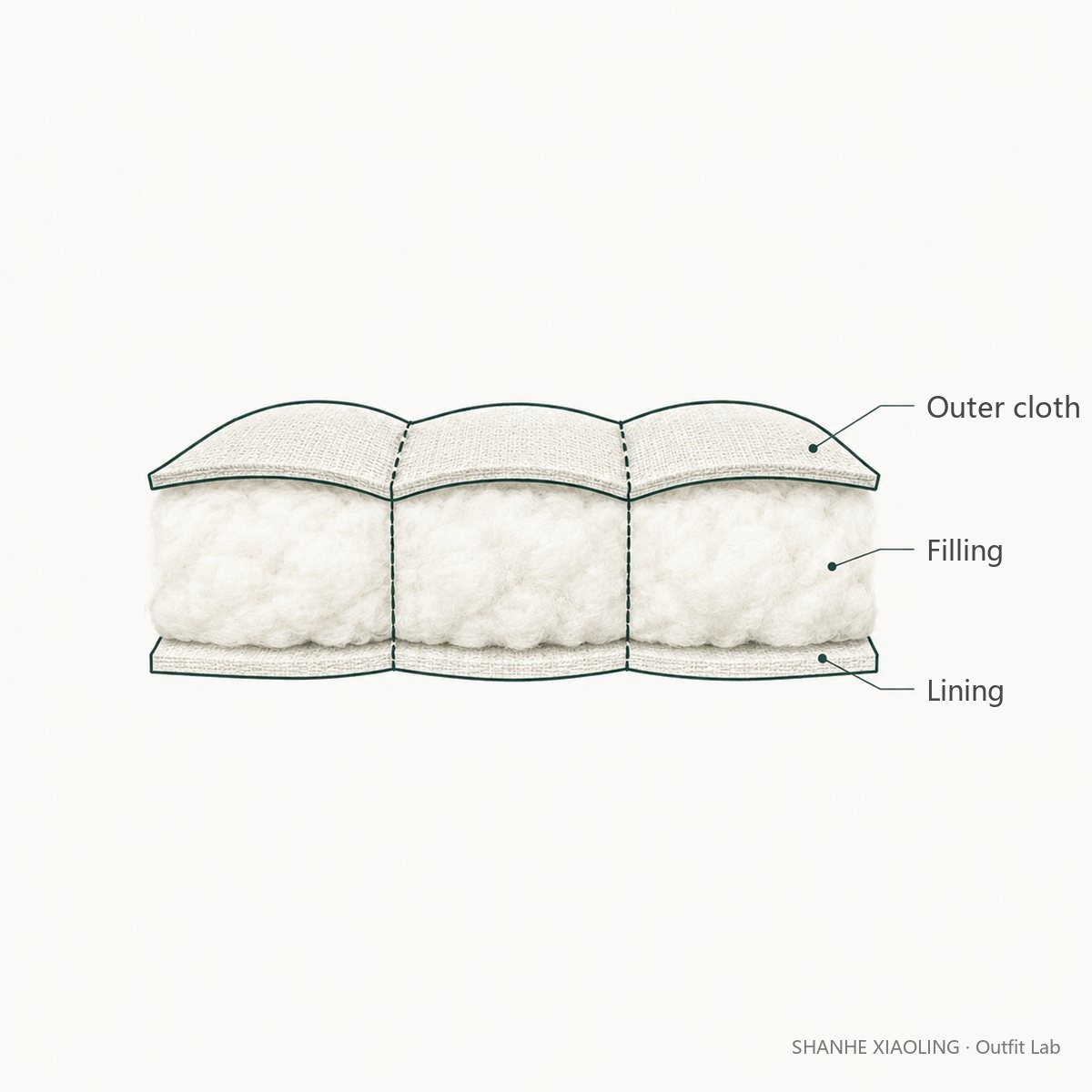
- Quilted cloth
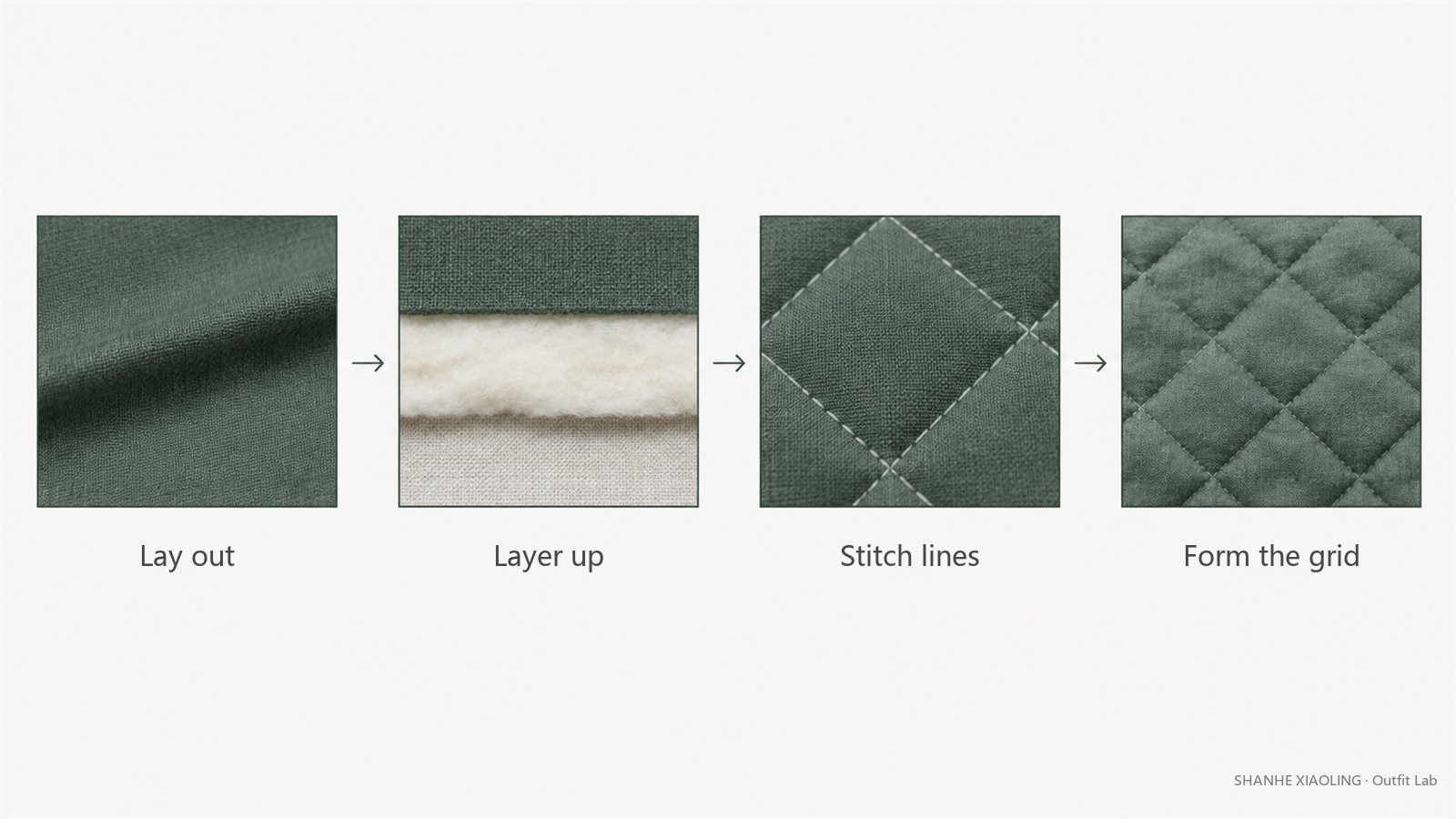
- Two layers of fabric with a filling between them, held by stitched lines. Functionally it traps air. Visually it introduces a grid — a rhythm of lines that flat cloth does not have. A diamond quilt reads as structure; a horizontal quilt reads as calm.
- Rib knit
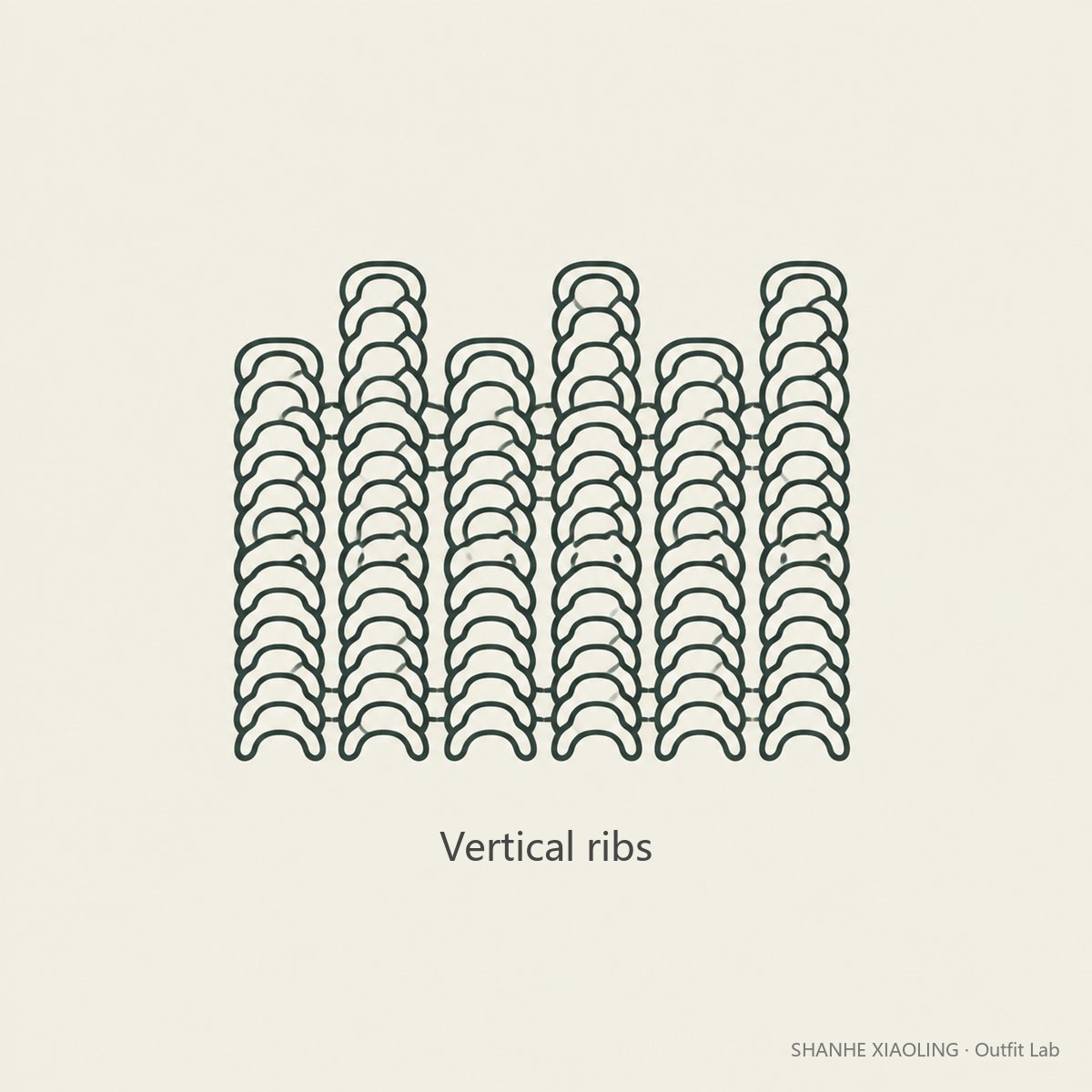
- A knitted fabric with vertical ridges that stretches across its width. We use it where a garment has to move with the body — under a structured piece, or at a neckline that needs to recover its shape.
- Jacquard
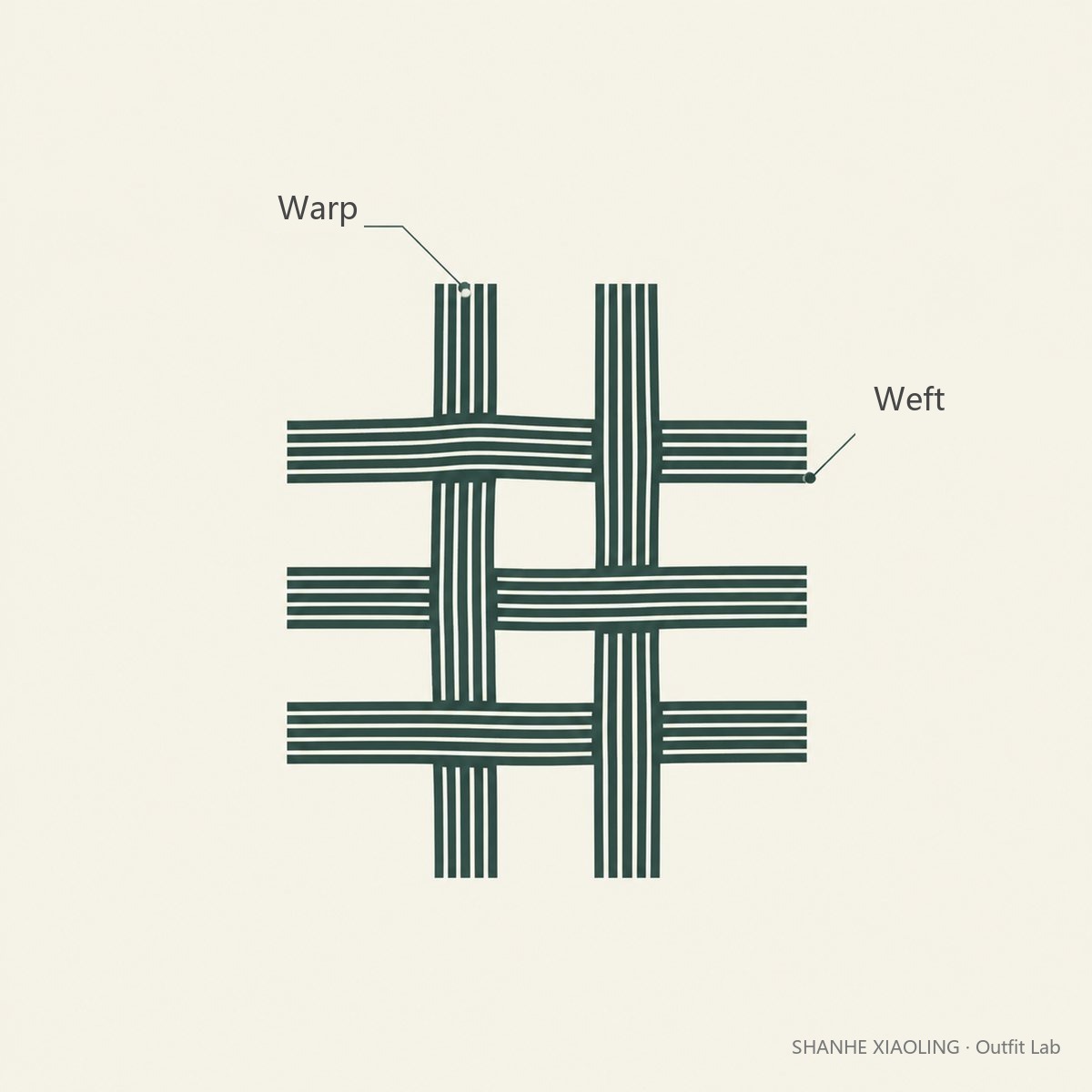
- A woven cloth in which the pattern is built into the structure of the weave rather than printed on top. Because the motif is carried by the weave itself, it is quiet from a distance and legible up close.
- Lace and gauze
- Open structures, used here for depth rather than exposure — to place a second layer of pattern between the eye and the garment, so the silhouette reads before the detail does.
- Satin weaves
- A weave that floats threads across the surface instead of binding them at every intersection, producing sheen and a smooth hand. Useful where a small area needs to catch light without any applied decoration.
- Hand-woven tape
- Narrow bands woven on a small loom, used at edges, waistbands and cuffs. Their value is structural and visual at once: they stop an edge from stretching, and they carry colour into a garment without a print.
Techniques
How the surfaces are built
These are the hand techniques referenced in the collection. The descriptions below are technical, not historical — they explain why a technique produces the marks it does.
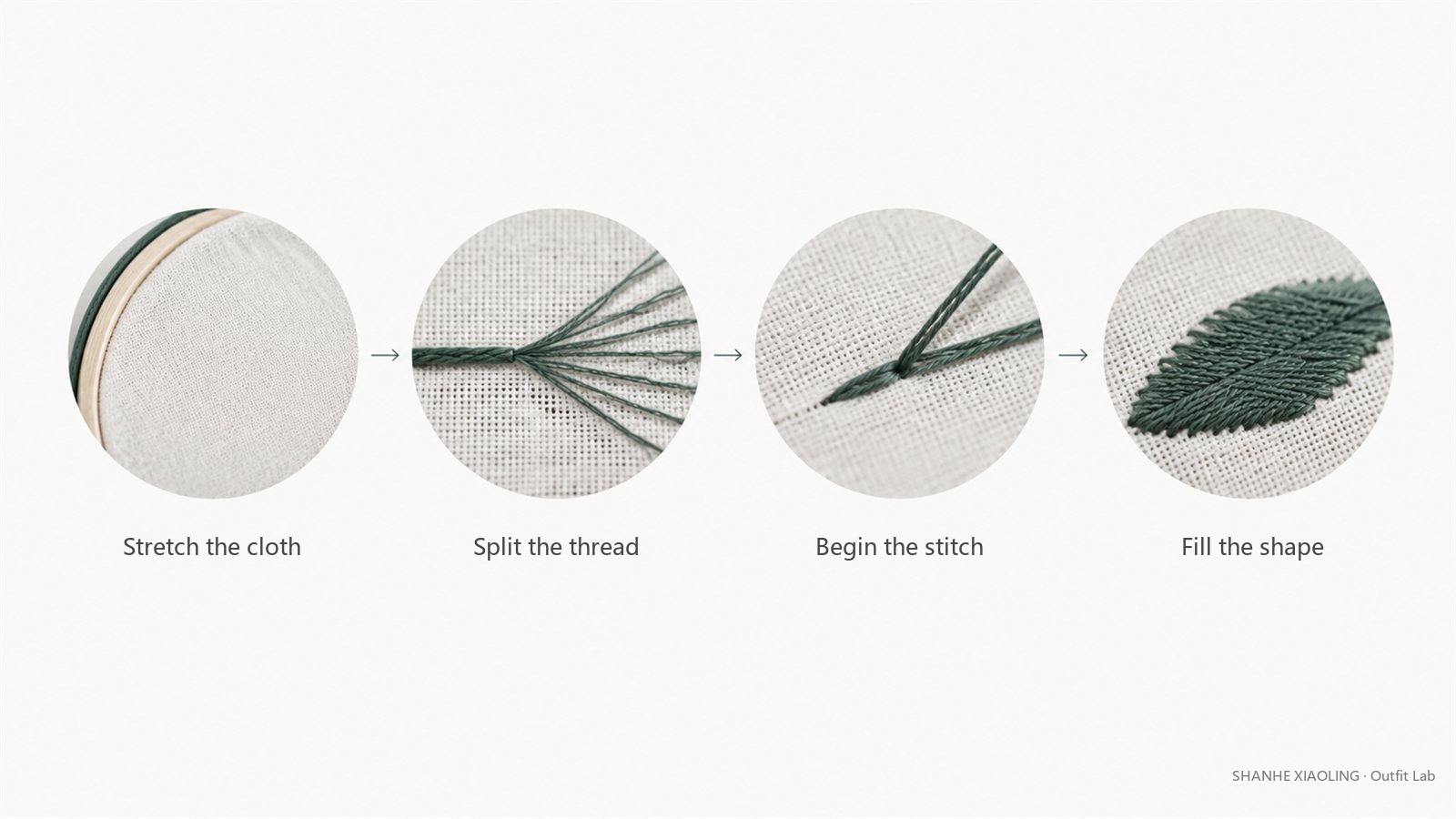
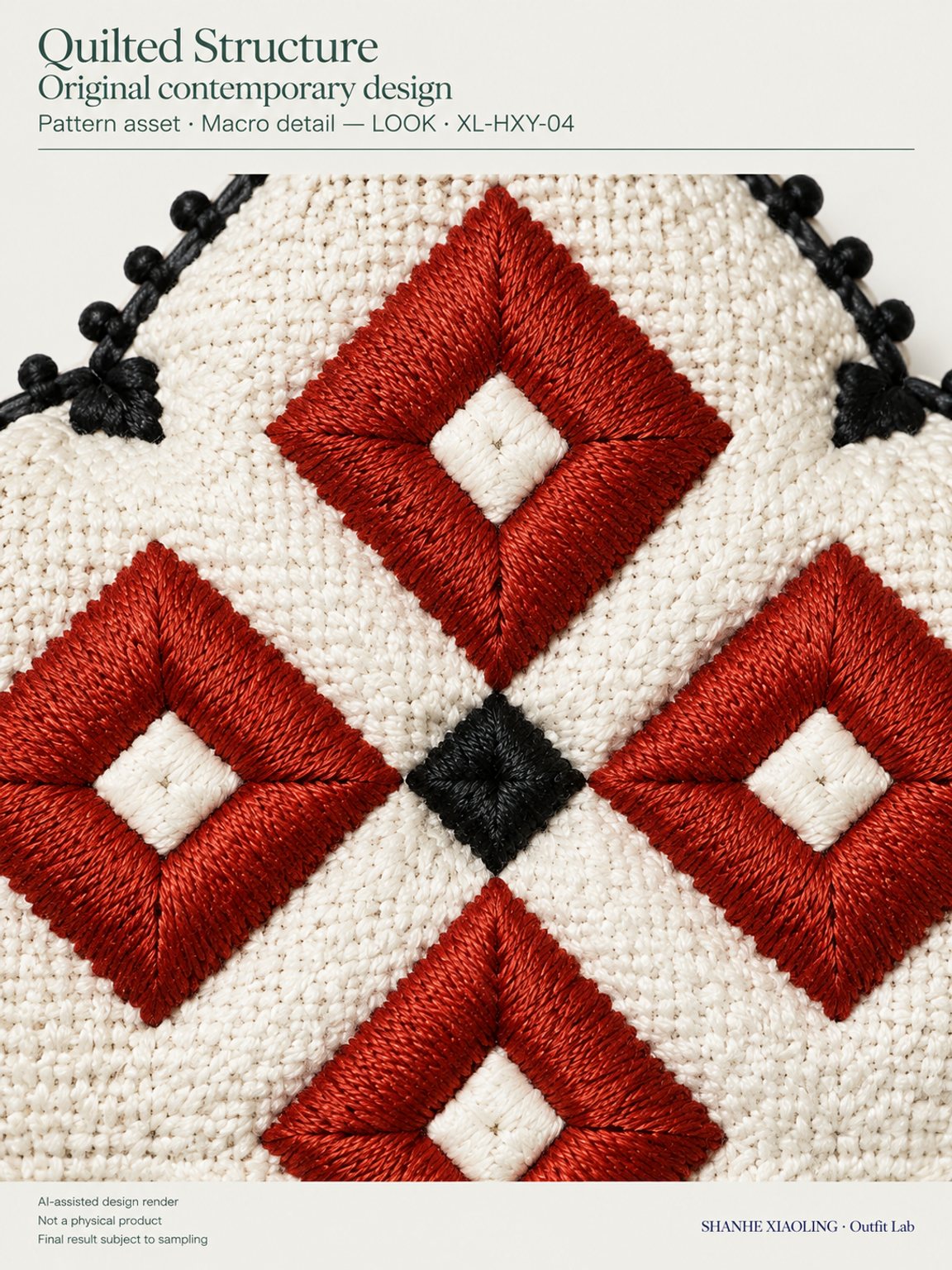
- Split-thread embroidery
- A technique in which a silk thread is divided before stitching, then worked with the separated filaments. The resulting line is flatter and denser than ordinary embroidery, with a surface that behaves almost like a woven plane rather than a raised thread. It is slow and unforgiving: the thread cannot be corrected once laid.
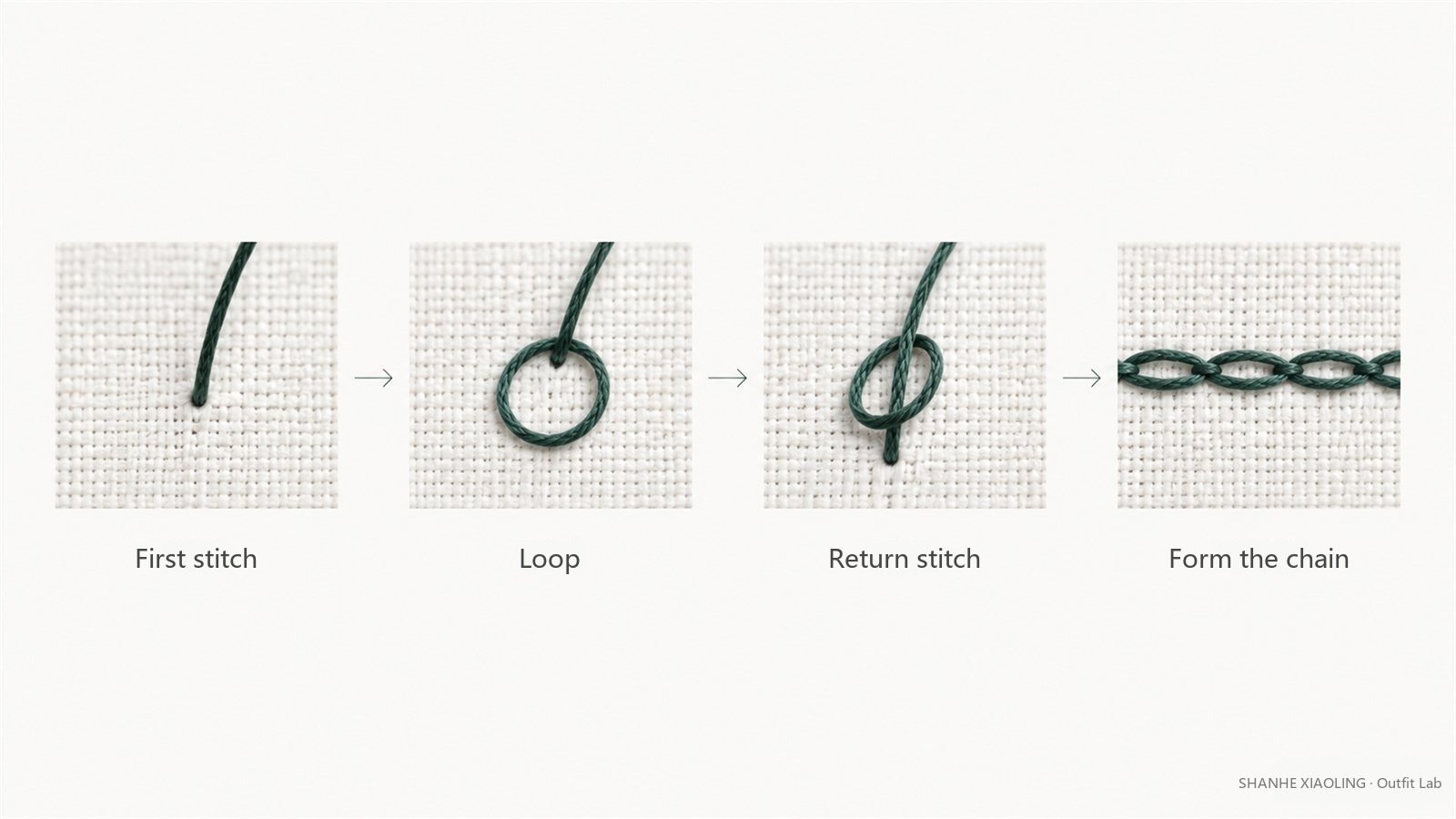
- Chain stitch
- A series of loops pulled through one another, forming a line that reads as a fine cord. Quick to lay and highly visible, which makes it useful for outlining a motif without adding weight.
- Quilting
- Stitching through two layers and a filling. The stitch pattern determines how the cloth holds volume: closely spaced lines stiffen, widely spaced lines allow loft. We use it structurally, to make a piece hold a shape on the body.
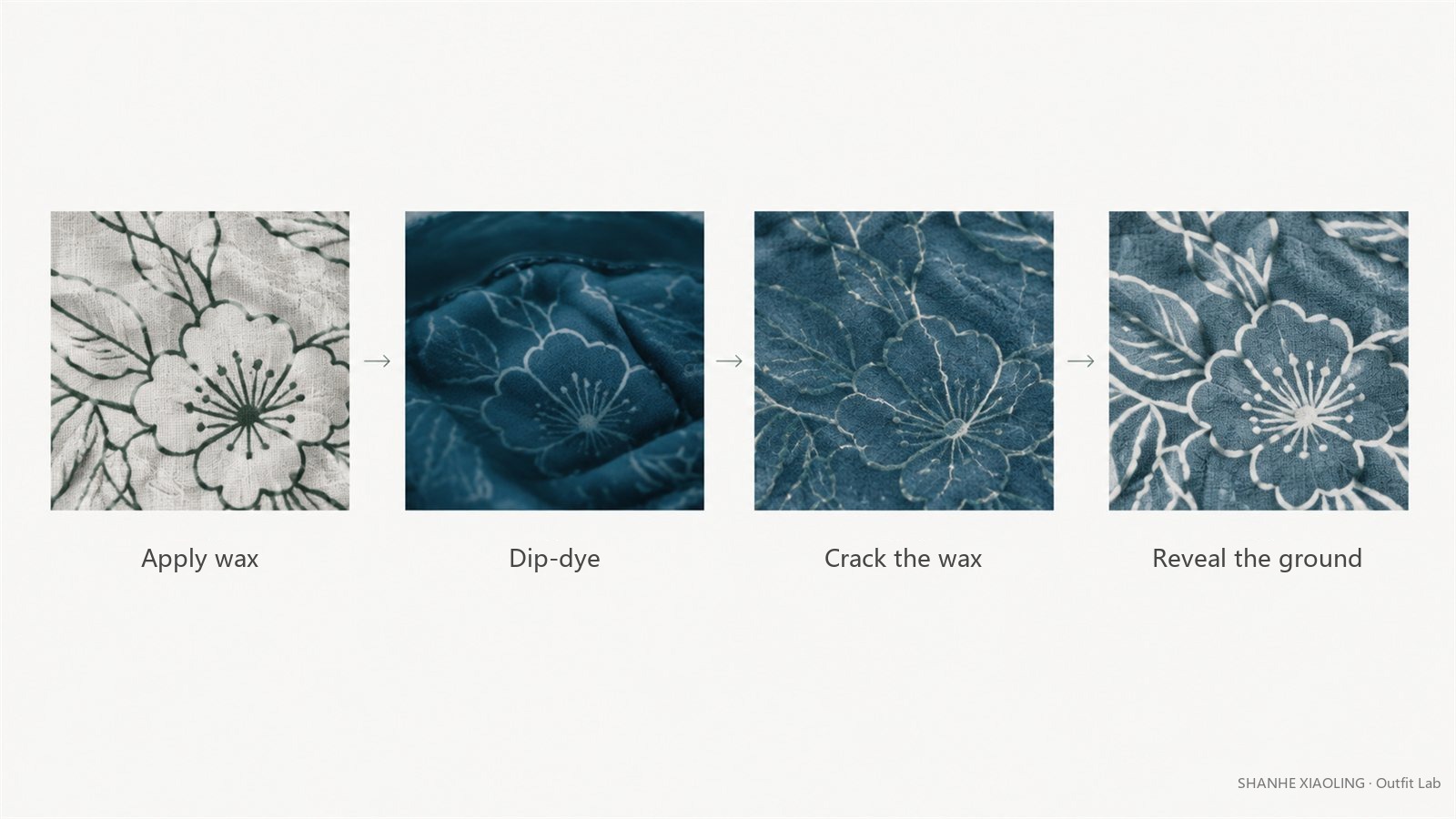
- Wax-resist dyeing
- Molten wax is applied to cloth to block dye, the cloth is dyed, then the wax is removed. Where the wax cracked, dye enters as fine lines — which is why the technique produces a characteristic web of irregular marks rather than a clean edge. The cracking is not a flaw; it is the signature.
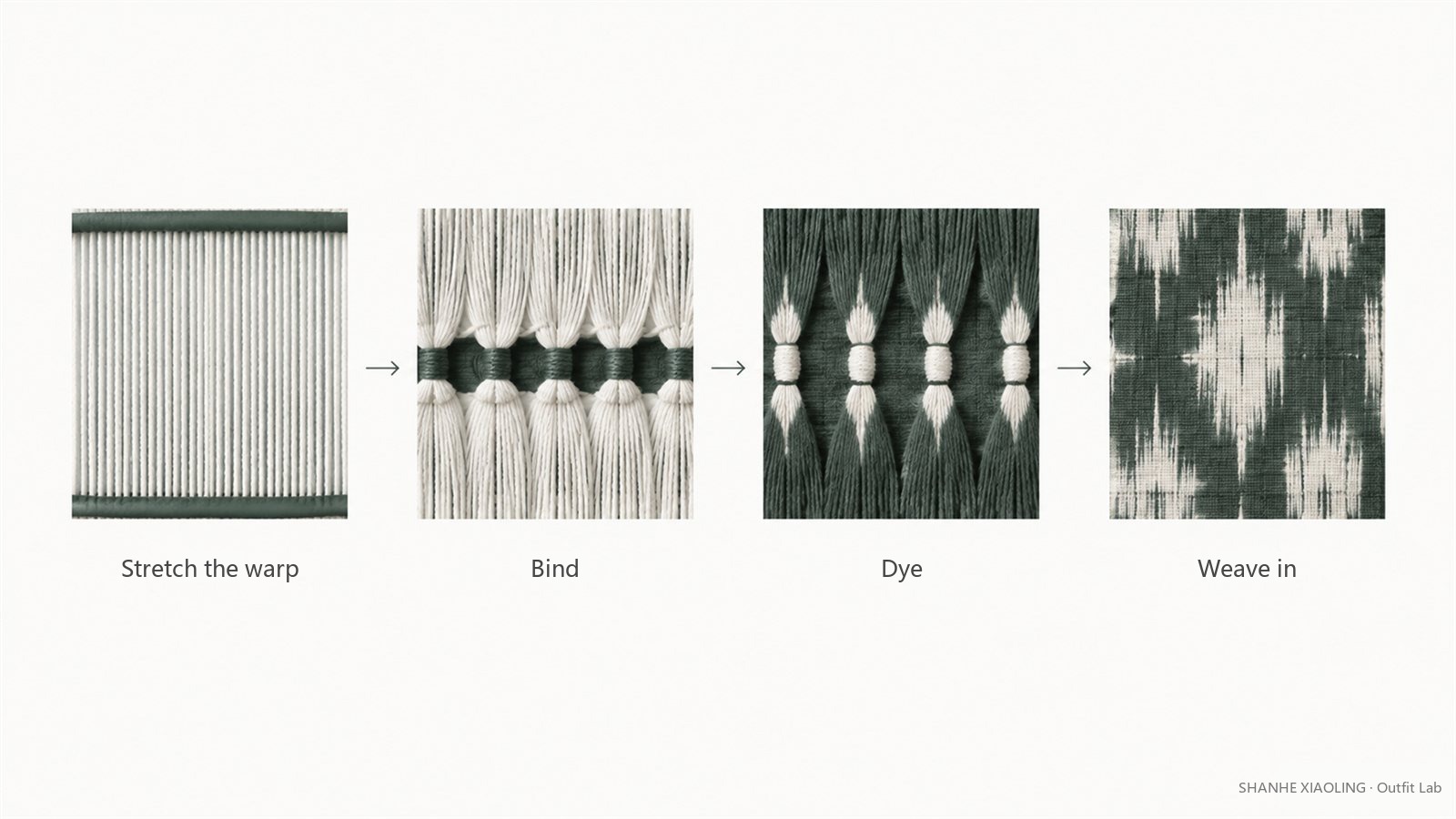
- Ikat
- Threads are bound and dyed before weaving, so the pattern is determined by where the binding sat on the yarn. The characteristic soft, feathered edge where colours meet is a direct result of the process. The motif is designed in the yarn, not on the finished cloth.
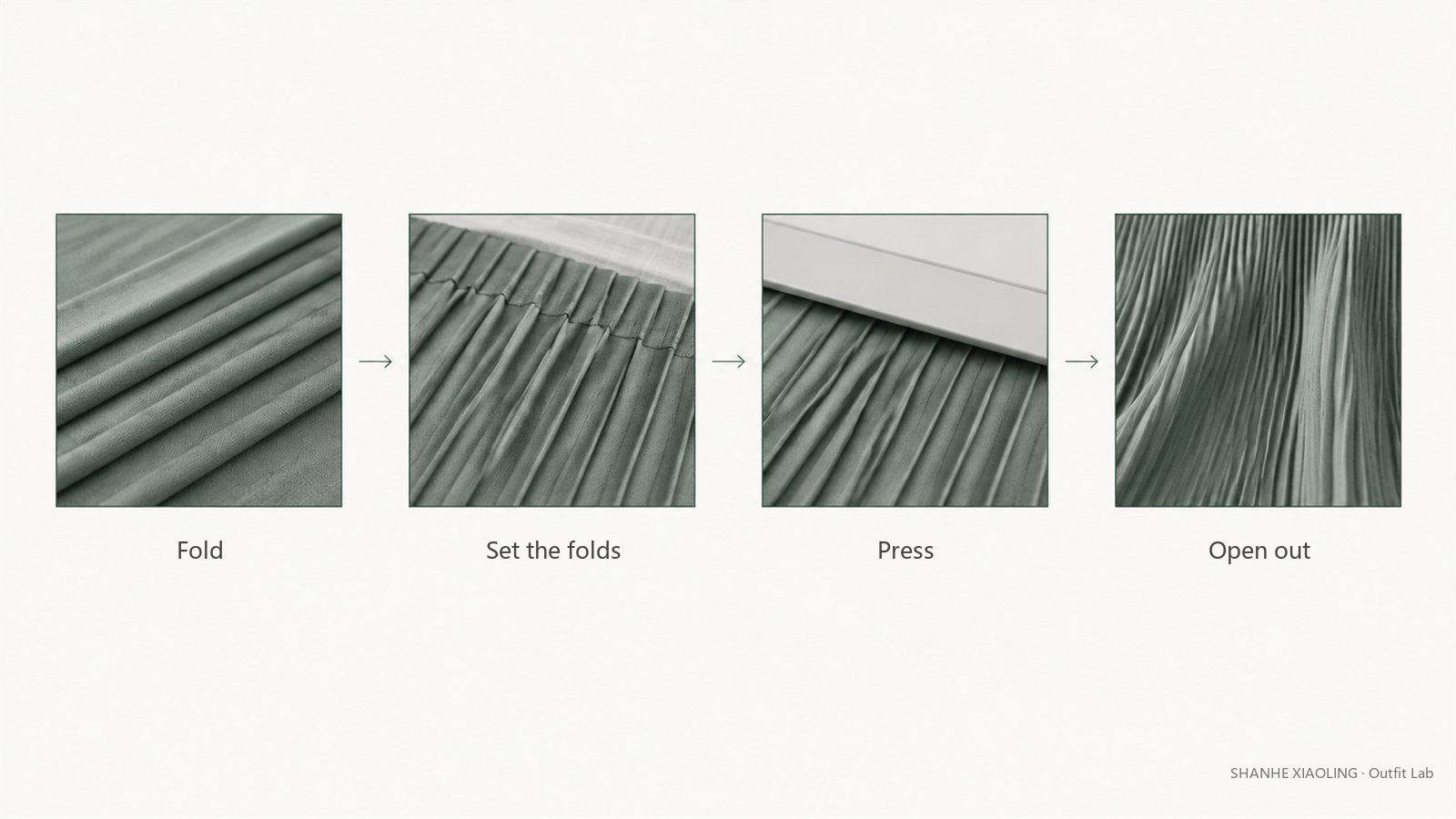
- Pleating
- Cloth is set into permanent folds. A densely pleated panel stores a great deal of fabric in a narrow width, so it moves independently of the body and returns to its shape when still. We use it to build rhythm into a silhouette.
- Patchwork
- Pieces are cut and joined edge to edge to compose a larger plane. Its logic is compositional: the seam is a design line. We use it where a surface needs to be divided into areas rather than decorated.
Motif logic
A motif is redrawn, never copied.
When we study a technique, we look at how its marks behave — symmetry, repetition, direction, and how an edge closes. We then draw a new motif that follows those rules. The result is a composition in the same grammar, not a reproduction of any existing pattern.
This is why nothing on this site is labelled a traditional pattern. It would be inaccurate, and it would also be unfair to the technique — a living craft deserves to be studied rather than quoted.
Material study
Three materials, three jobs.
Working vocabulary
Terms we use precisely
We keep a fixed English vocabulary so that our studio and our public writing say the same thing. These are the terms that carry the most weight.
- Craft reference
- The specific documented technique a study starts from.
- Cultural fact
- What we learned about how that technique mechanically works.
- Translation
- The extraction of form, proportion, rhythm and colour — and the discarding of the rest.
- Original motif
- A pattern drawn by us, in the grammar of the reference, presented as new work.
- Structure breakdown
- A drawing of how a garment is layered, and where each element sits on the body.
- Material breakdown
- An account of which fabric does which job in a single look.
- Design render
- An AI-assisted visualisation of a design (labelled).
- Multi-material
- The practice of combining fabrics with distinct functions in one garment.
A note on sourcing
We are building a source record for every craft reference used in the collection, so that each study can name where its technical information came from. That record is not finished. Until it is, we keep technical claims to what we can describe from the mechanism itself.